I heard from an operator recently in one of my coaching groups that stopped me cold.
Experienced independent fast casual owner. Been in the business long enough to knowwhat he is doing. And he told me that in September that his dine in sales had fallen somewhere between 30 and 40 percent compared to the same period last year.
Not a struggling rookie. Not someone who opened six months ago and never figured it out. An experienced operator who knows food and knows operations.
And here is what he had already tried before.
New menu items. Lunch promotions. Dinner promotions. Paid advertising. Multiple marketing companies.
All of it. And sales were still down 30 to 40 percent.
His frustration was not about effort. He had put in the effort. His frustration was that he had run out of ideas. He knew what to do when the food was off or the kitchen was slow. He did not know what to do when he had tried everything and the number kept going the wrong direction.
I have been thinking about what he said ever since.
The Instinct Is Wrong
When sales fall, the instinct is to do more.
More promotions. More advertising. More specials. More marketing companies. More ideas pulled from other people’s playbooks. More noise thrown at the problem until something sticks.
I understand that instinct. I had it myself when I owned my own locations. Sales drop and the brain immediately goes into motion. Do something. Try something. Fix it.
But here is what nobody tells you when you are in the middle of a 30 percent decline.
Doing more things before you understand the actual problem is not hustle. It is guessing. And guessing with your marketing budget in a down period is one of the fastest ways to accelerate the damage.
The operator who tried everything did not fail because he lacked effort or creativity. He failed because he skipped the diagnostic. He went straight to treatment without a diagnosis. And if you walked into a doctor with chest pains and they immediately scheduled you for knee surgery because that worked for the last patient, you would walkout of that office and never go back.
Sales problems work the same way. The treatment depends entirely on what is actually wrong.
The Diagnosis Nobody Does
Before you spend another dollar on marketing, before you run another promotion, before you hire another agency, you need to honestly answer these questions.
Is it an awareness problem?
Do people in your market know you exist? If someone new moved into your neighborhood six months ago, would they have any reason to know your name? Awareness problems look like flat new customer counts and low first time visit rates. You cannot fix an awareness problem with a bounce back it’s new customer marketing.
Is it a frequency problem?
Your regulars are still coming in, but less often. Maybe once a month instead of twice. A 30 percent sales decline can happen entirely from existing customers quietly dialing backwithout a single complaint or bad review. Frequency problems require a reason to return built into the visit itself.
Is it a new customer problem?
The people who used to find you are not finding you anymore. Maybe a competitor opened nearby. Maybe your search visibility slipped. New customer problems look like declining cover counts even when your regulars are satisfied. You cannot solve this by marketing harder to the people who already know you.
Is it a reviews and reputation problem?
Before anyone tries a new restaurant today they look it up. If your rating has slipped, if your most recent reviews are mixed, if a competitor down the street has 200 more reviews with a higher average score, you are losing customers before they ever walk through the door. No promotion fixes that until the reputation problem is addressed first.
Is it a service or experience problem?
Sometimes the marketing is working perfectly and the dining room is the problem. Slow ticket times. Inconsistent food. Staff who are checked out. Customers who came once had a mediocre experience, and quietly decided not to come back. You cannot advertise your way out of an experience problem.
Is it a pricing or value problem?
With menu prices up an average of 36 percent since 2020, customers are making different decisions than they used to. If your price increases outpaced your perceived value, people are not angry. They are just eating somewhere else where the math feels better.
Is it a daypart problem?
Maybe the restaurant overall is fine and one specific daypart collapsed. Lunch fell off a cliff. Sunday brunch dried up. A problem in one daypart can look like a whole restaurant problem on a P&L. The solution for a dead Tuesday lunch is completely different from the solution for a slow overall week.
Marketing Is a System, Not a Succession of Ideas
Here is what the experienced operator who tried everything was missing. And I say this with genuine respect for the effort he put in.
He was running plays. He was not running a system.
A play is a lunch promotion that runs for three weeks. A play is a new menu item you hope gets people excited. A play is hiring a marketing company and waiting to see what happens.
A system is different. A system starts with knowing who your customer is and where they come from. It tracks how many new customers you are getting every month. It measures how often your existing customers return. It captures customer information so you can reach them directly without depending on an algorithm or a delivery app or whoever happens to walk past your sign.
The Red Envelope promotion is one of the most reliable parts of that system for a simple reason. It does not wait for customers to decide to come back on their own. It gives them a sealed envelope with a prize inside and a redemption window next month. The decision to return is made at the table, before they leave, before the memory of the meal fades, before a competitor gets to them first.
One operator hit an 82 percent redemption rate.
Another added over $190,000 in sales from a single campaign. That does not happen because the promotion is clever. It happens because it is systematic. Every table. Every carryout order. Every time. Without fail.
That is what separates a play from a system.
Start With the Right Question
If your sales are down and nothing you have tried has worked, the answer is almostcertainly not a new idea.
The answer is a better question.
Not: what should I try next?
But: what is actually wrong?
Diagnose first. Then treat. In that order. Every time.
The operators who are winning right now in a tough market are not the ones with the most creative marketing. They are the ones who understood their specific problem clearly enough to solve the right thing.
Figure out what is actually broken. Build a system around fixing it. And stop throwing plays at a problem that needs a diagnosis.
Click below to learn how the Red Envelope Promotion fits into a system that brings customers back on purpose, not by accident.

Where the Red Envelope Fits In
Now here is where it gets interesting, and this is something almost nobody talks about.
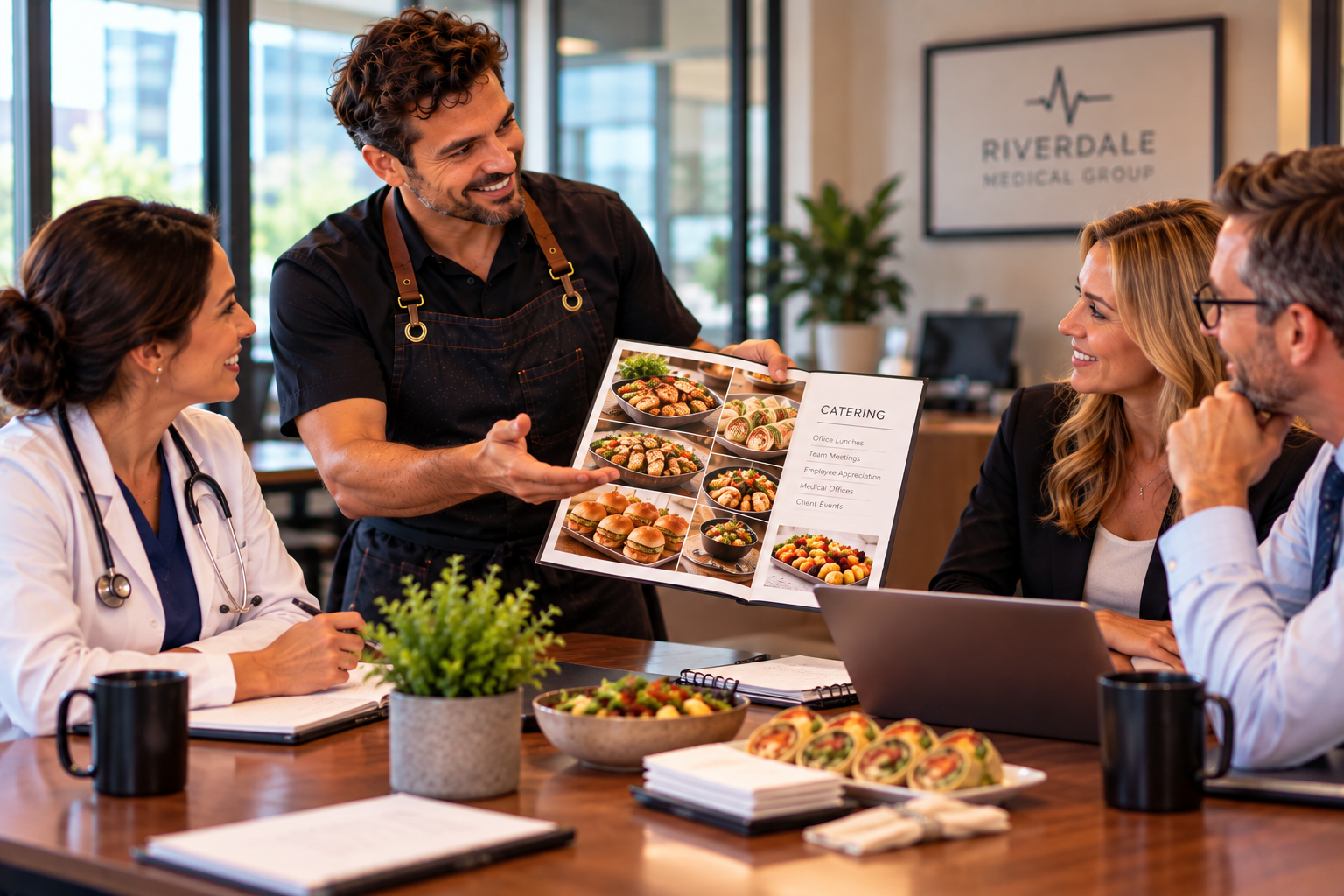
The Red Envelope promotion is not just a dine in tool. Plenty of operators who do cateringuse it as a relationship builder with their catering clients.
Picture this: you deliver a $600 lunch order to a law firm. Twelve attorneys, paralegals, and staff. You include a red envelope with the order for the office manager, or one for each person, depending on how you structure it. Inside is a prize they cannot open until they bring it back or call to redeem it.
You just gave twelve people a reason to come into your restaurant. People who may have never walked through your door before. People who now know your food is good because they just ate it. People who have a sealed envelope sitting in their desk drawer with their name on it.
That is not a gimmick. That is a bridge from your catering customer to your dining room customer. And it works in both directions, because a dining room guest who gets an envelope becomes curious about whether you cater. A catering client who gets anenvelope becomes a dine in regular.
The Red Envelope promotion has been proven over 19 years. Works for dine in, carryout,and catering accounts. One operator hit an 82 percent redemption rate. Another did over $190,000 in a single campaign, during his slowest month.
The Slow Season Is a Choice
The slow season is real. Traffic is down. Costs are up. Nobody is arguing with the data.
But the slow season is also, in part, a choice. It is what happens when your only revenue strategy is waiting for people to walk through the front door.
The kitchen you are paying for right now could be producing $1,500 corporate events. Recurring weekly office accounts. School lunch programs. Catering orders for the pharmaceutical rep who needs to impress a doctor’s office every Thursday.
None of that requires a full dining room. None of it requires a new menu. None of it requires a marketing budget.
It requires a phone call and the willingness to go ask for the business that is already out there waiting for someone to ask for it.
Stop trying to fill every empty table.Go sell the table you never have to set.
Ready to build a catering revenue stream and bring those new customers back through your front door?
Click below to learn how the Red Envelope Promotion works and see proof.

Michael Thibault
Known as “The Done For You Marketing Guy for Restaurants.” International Speaker on Restaurant Marketing. Published contributing author of 4 Marketing Books. Industry expert on Google Searches and Review Sites. Recovering Independent Restaurant Owner and Caterer of over 21 years. And, all-around good guy.