He’s heading into his busiest season of the year. Tables booked. Staff scheduled. Summer revenue on the line. Everything lined up perfectly.
Then his general manager walked into his office and handed him a letter.
One week notice.
Not two weeks. One week. After three years.
I could hear it in his voice when he called me. That specific kind of stress that hits you right in the chest when something you never saw coming suddenly becomes the only thing you can think about. He had a week to find a replacement general manager for a large, busy restaurant going into peak summer season.
You know what happened next. He couldn’t find anyone in time. So now he’s doing the GM job himself. On top of his owner job. On top of everything else. He told me he’s putting in 14 hour days and the summer hasn’t even hit full stride yet.
Here’s the part that kills me.
He never saw it coming. And he probably could have.
The Most Expensive Surprise in the Restaurant Business
Losing a great employee is always painful. But losing the right employee at the wrong time can genuinely threaten a season, a location, or a business.
And we’re not just talking about the cost of recruiting and training someone new, which industry estimates put somewhere between $2,000 and $15,000 depending on the role. We’re talking about the customer relationships that walk out the door with them.
Your line cook? Customers probably don’t know his name. But your general manager? Your best server who’s been there five years? Your bartender who knows every regular by their first name and their usual drink?
Those people carry relationships. And relationships drive repeat visits. When they leave, some of those customers follow. Not all of them. But enough to feel it in your numbers.
Summer is when this happens most. The heat. The volume. The stress of a packed house every Friday night. Staff burnout accelerates. Competing offers come in. And the employees who’ve been quietly unhappy for months finally decide enough is enough.
The owners who get blindsided are almost always the ones who stopped communicating.

Communication Is the Whole Game
Here’s what I told my client after he called me in a panic.
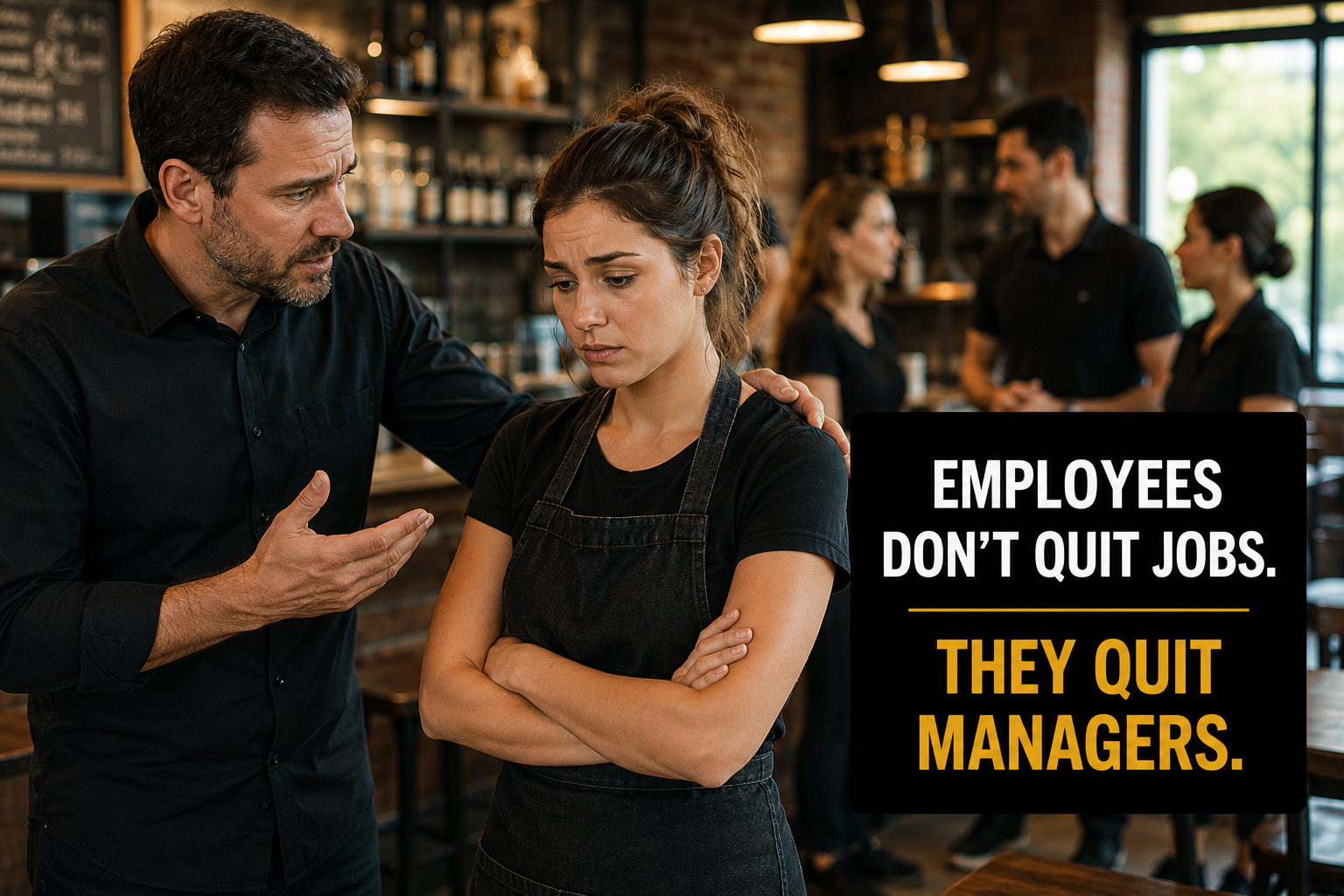
The week notice wasn’t the problem. The problem started months earlier, when the conversations stopped happening.
When you’re communicating regularly with your key people, you know things. You know when someone’s frustrated. You know when they’re being recruited somewhere else. You know when they feel undervalued, overlooked, or burned out. You know when something changed at home that’s making work harder. You don’t find out about any of that in a resignation letter. You find out in a conversation.
Most restaurant owners are so deep in the day to day that the only time they talk to their managers is when something goes wrong. That’s not communication. That’s crisis management.
Real retention starts with a simple habit. A genuine check in. Not a performance review. Not a formal meeting. Just a real conversation. How are you doing? What’s driving you crazy right now? What would make your job better? Is there anything I should know?
Those conversations take 10 minutes. They cost nothing. And they are the single most effective retention tool any restaurant owner has.
My client wasn’t having them. Now he’s working 14 hour days in July.
Three Low Cost Moves That Actually Keep Great People
1. Check in before they check out.
Schedule a genuine one on one with every key employee at least once a month. Not about numbers. Not about performance. About them. Make it informal. Buy them a coffee before the lunch rush. The goal is simple: find out what’s going on before it becomes a resignation letter on your desk.
If someone is unhappy, you want to know that in April, not in June when you’re staring down your busiest season with an open GM position.
2. Recognize the people who make you money.
This sounds obvious. It is shockingly rare in practice.
Your best employees know they’re your best employees. They watch how you treat them compared to how much you depend on them and they do the math. When those two things don’t add up, they start taking calls from your competition.
Recognition doesn’t have to mean a raise every quarter. It can be as simple as saying in front of the team, “I want everyone to know that Jamie is the reason Tuesday nights run as smooth as they do.” It can be a bonus tied to a great month. It can be a handwritten note. It can be giving someone a title that reflects what they actually do.
People don’t just leave for money. They leave because they feel invisible. Make your best people feel visible.
3. Give them a future, not just a shift.
The employees who stay are almost always the ones who feel like they’re going somewhere. The ones who leave are the ones who feel like they’re just showing up.
Talk to your key people about where they want to be in two years. What do they want to learn? What role do they want to grow into? Then show them a path, even a rough one, that connects where they are now to where they want to go.
That conversation alone changes the way an employee thinks about your restaurant. It’s no longer just a job. It’s a chapter in their story. And people don’t walk out on chapters they’re invested in.
The Owner Who Does Everything Is the Owner Who Loses Everyone
Here’s the uncomfortable truth underneath all of this.
The reason my client got blindsided isn’t just that he wasn’t communicating. It’s that he was too stretched to communicate. Too busy. Too deep in operations. Too focused on putting out today’s fire to notice the smoke coming from somewhere else.
That’s the real cost of an owner who carries too much. Not just burnout. Not just bad decisions made on no sleep. But a team that feels invisible, underled, and undermanaged, because the person at the top is drowning.
The restaurants with the best retention aren’t run by owners who do everything. They’re run by owners who built systems that let them lead instead of just survive.
If you’re running 14 hour days and still feel like things are slipping, that’s not a staff problem. That’s a structure problem.
And that’s exactly the kind of thing we help restaurant owners fix.

Michael Thibault
Known as “The Done For You Marketing Guy for Restaurants.” International Speaker on Restaurant Marketing. Published contributing author of 4 Marketing Books. Industry expert on Google Searches and Review Sites. Recovering Independent Restaurant Owner and Caterer of over 21 years. And, all-around good guy.