
Let that sink in for a second.
Someone in your town — right now, tonight — is typing into their phone: “What’s the best burger place near me with a good vibe and outdoor seating?”
Maybe they’re asking Google. They probably still are, and we’ll get to that in a minute because Google is still the 800-pound gorilla in the room and don’t let anyone tell you otherwise.
But a growing number of them are asking something else entirely.
ChatGPT. Google Gemini. Claude. Perplexity. One of the half-dozen AI assistants that now live on everyone’s phone, laptop, and kitchen counter.
And instead of getting a list of ten blue links they have to click through one by one, they get one answer. Confident. Conversational. Specific. Like a recommendation from a friend who’s eaten everywhere in town.
The question is — is your restaurant in that answer?
Google Isn’t Going Anywhere. But It’s Getting Smarter.
Let’s be clear about something right up front.
Google still dominates local restaurant search. When someone types “restaurants near me” or “best tacos in [your city],” Google is still where most of that happens. And Google Maps, Google reviews, and your Google Business Profile are still the most important pieces of your online presence. Full stop.
But here’s what’s changed: Google itself is now an AI.
Google’s AI Overviews — the summaries that now appear at the very top of search results before you even see any links are showing up for 68% of local searches. That means before your customer even sees your website or your Google listing, they’re reading an AI-generated summary pulled from your reviews, your website, and everything else Google knows about you.
So when we talk about AI search, we’re not talking about something that’s replacing Google. We’re talking about something that’s inside Google and also living on several other platforms your customers are using every single day.
Meet the AI Platforms Finding Your Next Customer
Here’s who’s in the game right now:
Google Gemini: Google’s own AI. Deeply integrated with Google Maps, Google reviews, and search. If you’re already focused on Google, Gemini is reading everything you’re putting out there. This one matters most.
ChatGPT: The one everyone’s heard of. More than 500 million people use it monthly and usage jumped nearly 70% in just the first half of 2025. ChatGPT leans heavily on third-party directories like Yelp when recommending restaurants. If your Yelp listing is a mess, ChatGPT may not know you exist.
Perplexity: The research-focused one. Pulls from reviews, social media, news, and forums. Great at surfacing restaurants with strong local buzz and lots of mentions across the web.
Claude: Strong for longer research queries. Someone planning a trip, a rehearsal dinner, or a corporate event might use Claude to research restaurant options. If you’re chasing events and private dining, this one’s worth knowing about.
Each AI has its own personality and pulls from slightly different sources. But here’s what they all have in common: they’re all reading your reviews, your listings, your online presence – and making a judgment call on whether to recommend you.
How AI Decides Who to Recommend
This is where it gets interesting… and a little uncomfortable.
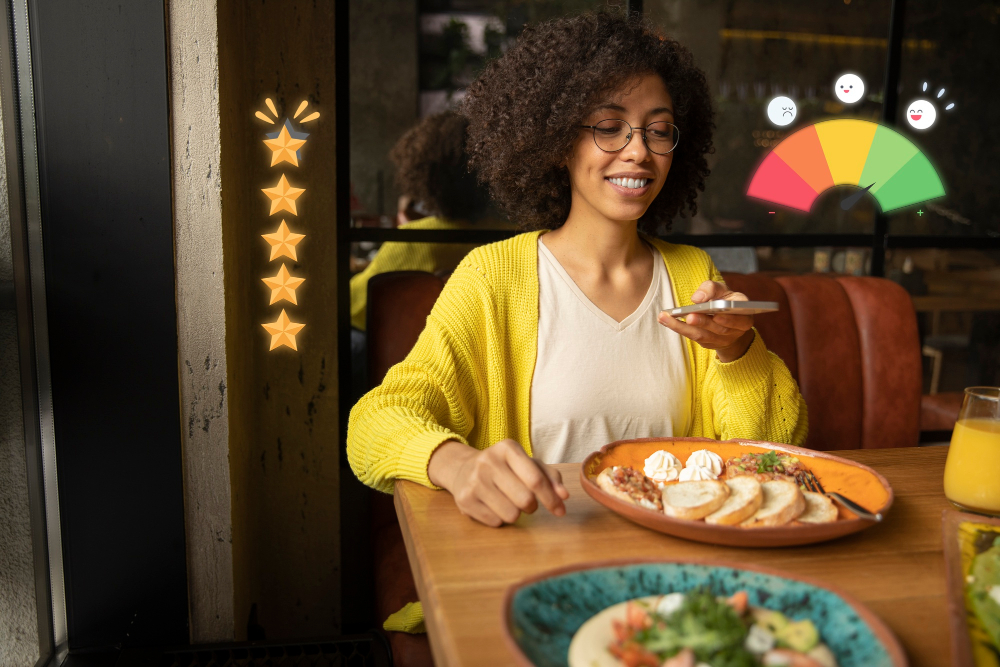
AI doesn’t just look at your star rating. It analyzes review text to understand what your restaurant is actually known for. Romantic atmosphere. Great for groups. Incredible happy hour. Kid-friendly. Fast service. Those specific details in your reviews are what get you recommended for specific searches.
Volume matters as much as stars. A restaurant with 200 reviews averaging 4.2 is going to show up more confidently than a restaurant with 30 reviews averaging 4.9. AI treats review volume as a credibility signal; the more people who’ve validated you, the more confidently it recommends you.
Here’s the stat that should wake you up: only about 15% of restaurants secure the primary recommendation slot in an AI response. Eighty percent might get mentioned somewhere. But one in seven gets the top spot.
One in seven.
The rest are invisible.
Three Things You Can Do This Week
1. Get more Google reviews. Starting tonight.
After a great experience, your server says: “If you had a great time we’d love a Google review — it takes 60 seconds and means the world to us.” That’s the whole script. Volume and recency both matter to Google and every AI that reads Google. Reviews from last Tuesday beat reviews from six months ago every single time.
2. Lock down your Google Business Profile.
Open it right now. Are your hours correct? Menu current? Recent photos that actually look good? Description specific enough that AI knows exactly what kind of restaurant you are and who you serve? “Great food and great service” tells AI absolutely nothing. “Family-owned smokehouse specializing in Texas-style BBQ with 40 craft beers on tap” tells it everything.
3. Search for yourself the way your customers do.
Open Google, ChatGPT, and Perplexity. Type: “Best [your cuisine] in [your city].” See who shows up. See who’s beating you. That’s your competition in the AI world right now — and now you know exactly what you’re up against.
Find Out Exactly Where You Stand
Most restaurant owners have no idea how their online presence actually looks across all the places AI is reading — Google, Yelp, TripAdvisor, Facebook, and everywhere else.
That’s why we put together a free Restaurant Scorecard that shows you exactly how your restaurant ranks against your local competition across every major review platform — the exact same sources AI uses to decide who to recommend.
No guessing. No hoping. Just a clear picture of where you stand and what needs fixing.
[Click here to get your free Restaurant Scorecard and see how you rank.]


Michael Thibault
Known as “The Done For You Marketing Guy for Restaurants.” International Speaker on Restaurant Marketing. Published contributing author of 4 Marketing Books. Industry expert on Google Searches and Review Sites. Recovering Independent Restaurant Owner and Caterer of over 21 years. And, all-around good guy.